Book IV

Forbidden Knowledge cracks open Bible secrets the Vatican has concealed for centuries by excavating the original Hebrew. For generations, religious authorities maintained total control by keeping the scriptures locked in Latin—a language only priests and the wealthy could understand. This let them tell the masses whatever served their power, burying truths that empowered independent thought. That was the real Dark Ages.
When brave monks rose to spread this forbidden knowledge, they were hunted down. But the seed of rebellion was planted. To quell the uprising, the authorities finally gave the people a Bible in their own tongue. Yet this "authorized" version was carefully filtered, its deviations from the potent Hebrew source hidden from untrained eyes. So ask yourself: Did the Dark Ages end, or did the gatekeepers simply change the locks? You decide.
Introduction:
The fundamental differences between modern English and biblical Hebrew. (2:15)
Chapter 1: Genesis Science
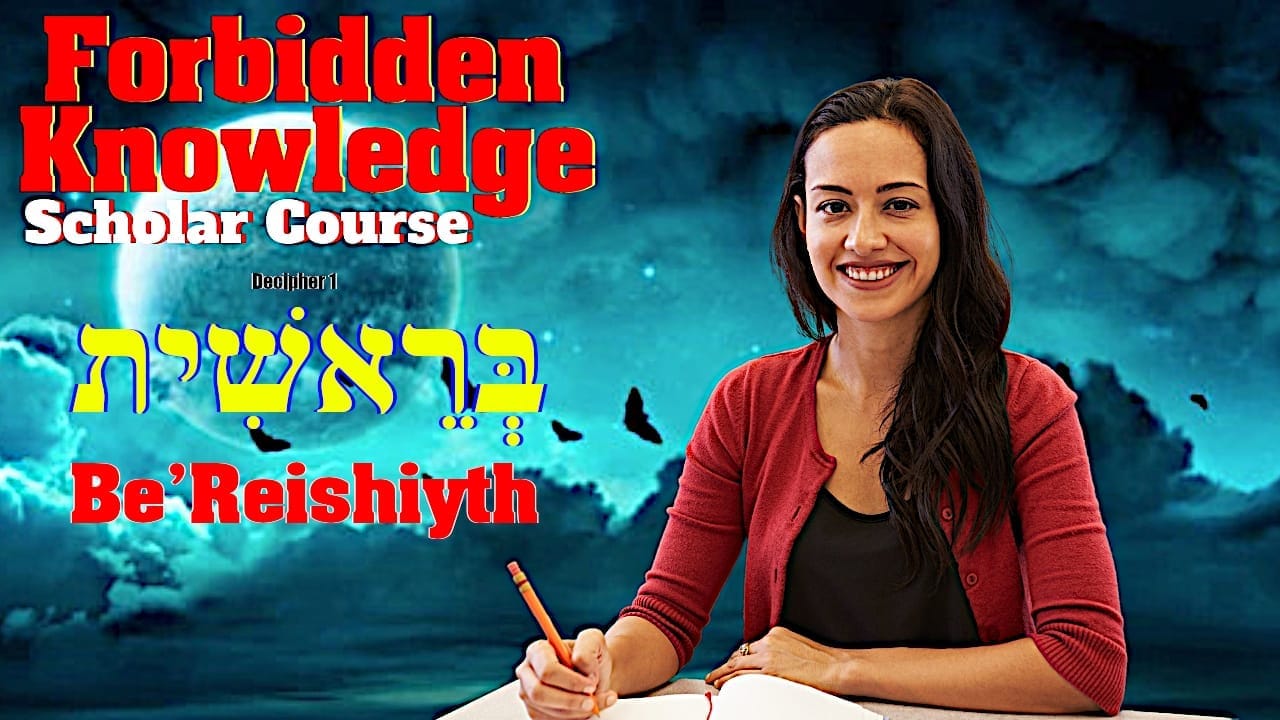
Delve into the mystery of the first word of the Hebrew Bible: "Be'Reishiyth" (בְּרֵאשִׁית). We will decode its multilayered meaning, moving beyond the simple English translation of "In the beginning" to uncover the text's original conceptual framework. We will then re-examine the final foundational word, "aretz" (אֶרֶץ), restoring its full depth to complete a revolutionary understanding of the creation narrative. (10:00)
Chapter 2: Bara
We have been told "God created" since childhood. But what if that phrase is a profound misunderstanding? For the first time, we can question it. What did the original author intend to convey? Is "created" a precise translation, or a fundamental mistranslation that has shaped our worldview from the very first verse? By interrogating the word we've always called "created," we don't just get a new translation; we gain access to an ancient and radically different understanding of origins. (4:51)
Chapter 3: Elohiym
Consider this: the most fundamental term in scripture, the word "Elohiym" (אֱלֹהִים), has been translated for millennia simply as "God." Yet, in the original Hebrew, its meaning is profoundly more complex. What if "Elohiym" was never meant to describe a solitary Creator? The implications of this single investigation are staggering. Prepare to have everything you thought you knew about Genesis completely recalibrated. (5:21)
Chapter 4: The Mystery of "Ayth"
The fourth word of the Hebrew Bible is "ayth" (אֵת). To most translators, it is a grammatical enigma; a word deemed untranslatable and to some a mere marker for a direct object. But what if the dismissal of "ayth" is our greatest oversight? In a text where every word is deliberate, what profound meaning might this "mystery particle" carry? Could "ayth" be the very key to unlocking the author's original cosmological framework? To ignore it is to ignore the architecture of the opening thought. (3:52)
Chapter 5: Ha'Shamayim
The biblical Hebrew "Ha'Shamayim" is the forever poetic term officially translated as "the Heavens". However, there is more to this word than meets the eye. Most readers are confused because of what the text says versus what they see with their eyes. More confusion arises because we read a modern, theological concept ("Heaven") into an ancient, cosmological term. Suppose the true meaning makes everything crystal clear. But can you see the text through ancient eyes.? (3:53)

Chapter 6: Aretz
The Hebrew word "Aretz" (אֶרֶץ) presents a persistent puzzle. Traditional scholars translate it variously as "earth," "land," or "ground," depending on the verse. But what if this flexibility is a symptom of misunderstanding? In the precise architecture of Biblical Hebrew, core vocabulary is built on singular, foundational concepts. The secret is that "Aretz" has one primary, non-negotiable definition: Would you believe that it's neither of these three? (9:32)
Chapter 7: Before The Beginning
Traditional exegesis reads Genesis 1:1 and 1:2 as a linear sequence of events: first creation, then a formless void. But what if this foundational assumption is incorrect? What if these two verses are not chronological steps, but parallel perspectives? Hence, telling the same story two different ways. This isn't a contradiction; it's a deliberate narrative technique. Prepare to engage with the text not as a simple timeline, but as a profound, layered revelation. The implications will change how you read every page that follows. (7:29)
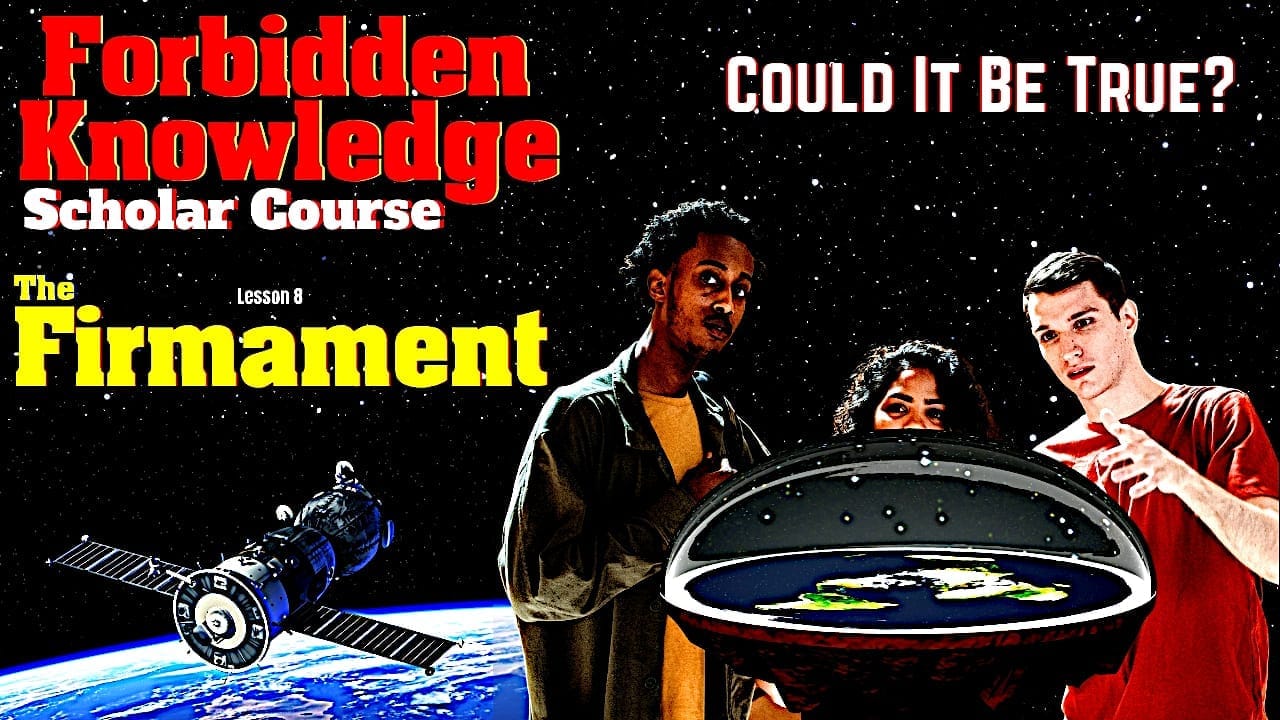
Chapter 8: The Firmament
The concept of the Firmament is an ancient one. So ancient that its original meaning, a crucial keystone in the cosmology of Genesis, has been obscured for centuries. The struggle to define it arises from a fundamental disconnect: the text describes one thing, while our modern gaze sees something else completely. Is it possible that once upon a time, the original author observed something that no longer exists... or is it still there? (9:11)
Chapter 9: Full Circle
To this day, many a scholar remains confused because of the use of ha'Shamayim in Genesis 1:1 and ha'Raquiya in Genesis 1:6-7. Did two different events occur at two different times? While this presents a textual mystery, a closer investigation of the original Hebrew (i.e., its semantic range, ancient Near Eastern context, and literary structure) reveals not a contradiction, but a sophisticated theological statement. (9:34)
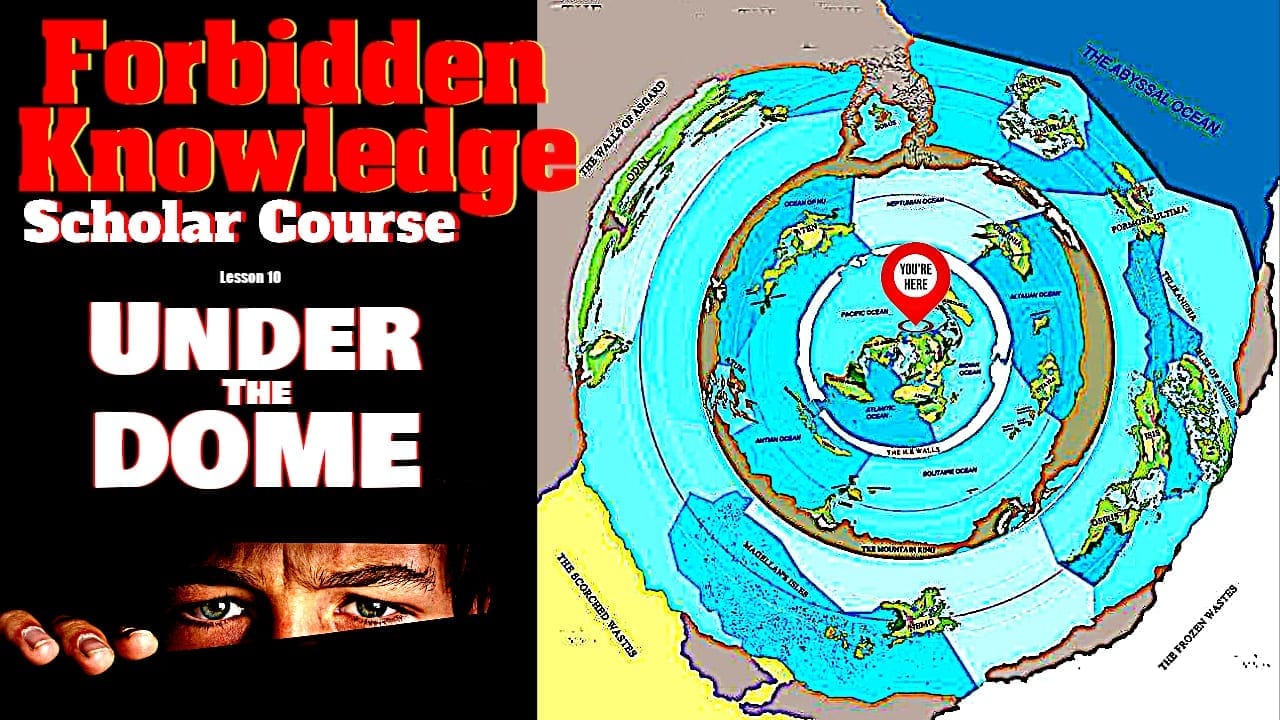
Chapter 10: Under The Dome
Explore the fascinating occurrences throughout the Old Testament where different authors provided various (but similar) physical descriptions of ha'Shamayim and ha'Raquiya. To appreciate the depth of biblical cosmology, one must trace the evocative imagery across the diverse literary landscape of the Old Testament. Different authors, provided varied physical descriptions that reveal a dynamic architecture of the heavens. (15:39)

Chapter 11: The Tower And The Flood
In this lesson, we move beyond the traditional reading of the Tower of Babel as a simple story (one of the oldest provided in Genesis) about language. We will excavate the layers of Genesis 11 to uncover startling, intentional details; from its political subtext and architectural symbolism to its deep structural links to the rest of Genesis, that have been obscured for centuries. We will discover that this is not merely a fable of human pride, but a foundational theological statement about the true struggle between mankind and a sovereign deity. (6:06)

Chapter 12: Babylon
Ancient Babylon was so grand that it found its way into the Old (and New) Testament. The Babylonian empire was once the world center of commerce and religion. Babylon produced the Enuma Elish; a poem that describes how the almighty god, Marduk, clashd with Tiamet and produced the heaven (solid expanse) and the earth (land below). (16:27)

Chapter 13: Stranger Things
The pages of the Old Testament are populated by a menagerie of mysterious creatures; beings whose Hebrew names evoke awe and uncertainty. Over centuries, translators have often rendered these terms with familiar yet loaded words: unicorns, dragons, leviathan, the devil, and Satan. In this study, we will not only discover what these original terms were and why translators chose those particular English equivalents, but we will also embark on the critical task of deciding whether these conclusions hold enduring weight or are merely speculative placeholders filling lexical and cultural gaps.(4:57)

Chapter 14: Light
A dominant school of thought asserts that Genesis 1 describes God creating the cosmos in six, consecutive 24-hour solar days, followed by a day of physical rest. While this reading offers a clear, sequential narrative, it raises significant textual and theological questions. For instance, if the first 'day' is marked before the creation of the sun (the primary timekeeper for a 24-hour day), how do we define its duration? Furthermore, does the concept of a divine 'rest' imply fatigue for an omnipotent, spiritual Being? This session will not advocate for a specific alternative model, but will examine the Hebrew text more closely, exploring the vocabulary and literary structure that have fueled centuries of thoughtful debate. (8:49)

Chapter 15 , Part 1: Let Us Make Man
According to a long-held tradition, the first human male, Adam, was created as a solitary being in Genesis 1:26. Yet, this reading raises profound and immediate questions. The narrative has already established a clear pattern: God creates every other living creature according to their kind, both male and female, and commands them to be fruitful and multiply. Why, then, would an all-powerful and all-knowing Creator; who just declared this creation pattern 'good', intentionally create one solitary heterosexual man, knowing this solitary state was 'not good' for him? (10:05)
Chapter 15 , Part 3: The Adam Project, Part 1
NO SPOILERS! (8:08)
Chapter 15 , Part 4: The Adam Project, Part 2
NO SPOILERS! (7:16)
Chapter 15 , Part 5: The Adam Project, Part 3
NO SPOILERS! (5:22)









Contact: office@solarwarstrilogy.com

An audio clip from Solar Wars: The Dawn of Two Suns: Chapter 17
An audio clip from Solar Wars: The Dawn of Two Suns: Chapter 4
An audio clip from Solar Wars: The Dawn of Two Suns: Chapter 20
An audio clip from Solar Wars: The Dawn of Two Suns: Chapter 9
An audio clip from Solar Wars: The Dawn of Two Suns: Chapter 3
An audio clip from Solar Wars: The Dawn of Two Suns: Chapter 15
An audio clip from Solar Wars: The Dawn of Two Suns: Chapter 18
An audio clip from Solar Wars: The Dawn of Two Suns: Chapter 8
An audio clip from Solar Wars: The Dawn of Two Suns: Chapter 13
An audio clip from Solar Wars: The Dawn of Two Suns: Chapter 19
An audio clip from Solar Wars: The Dawn of Two Suns: Chapter 6
An audio clip from Solar Wars: The Dawn of Two Suns: Chapter 11
An audio clip from Solar Wars: The Dawn of Two Suns: Chapter 7
An audio clip from Solar Wars: The Dawn of Two Suns: Preamble
An audio clip from Solar Wars: The Dawn of Two Suns: Chapter 14
An audio clip from Solar Wars: The Dawn of Two Suns: Chapter 10
An audio clip from Solar Wars: The Dawn of Two Suns: Chapter 5
An audio clip from Solar Wars: The Dawn of Two Suns: Chapter 1
An audio clip from Solar Wars: The Dawn of Two Suns: Chapter 2
An audio clip from Solar Wars: The Dawn of Two Suns: Chapter 16
An audio clip from Solar Wars: The Dawn of Two Suns: Chapter 12